The tab headings above - not just their drop-down menus - are links to pages
BBC News, 7 Jan 2024: Mouse filmed tidying up man's shed every night
History of the Park and its site Birds in the Park Slideshows of the flora and fauna
2023 newsletter, circulated 8 Jan 2024, from Dr Judy Webb BEM, who organises volunteering in the park
2022 newsletter circulated 1 Jan 2023
Info for dog owners from the Freshwater Habitats Trust on why dogs need to be kept out of ponds
They have a colourful poster: 'Buster & Molly's Guide to Ponds'
See also Judy's explanation of the damage dogs can cause to pondlife
SOME EARLIER WORK DONE BY VOLUNTEERS
2001 to 30 March 2015 April 2015 to December 2018 2019 to end 2021 2022 2023
BBC News, 7 Jan 2024: Mouse filmed tidying up man's shed every night
History of the Park and its site Birds in the Park Slideshows of the flora and fauna
2023 newsletter, circulated 8 Jan 2024, from Dr Judy Webb BEM, who organises volunteering in the park
2022 newsletter circulated 1 Jan 2023
Info for dog owners from the Freshwater Habitats Trust on why dogs need to be kept out of ponds
They have a colourful poster: 'Buster & Molly's Guide to Ponds'
See also Judy's explanation of the damage dogs can cause to pondlife
SOME EARLIER WORK DONE BY VOLUNTEERS
2001 to 30 March 2015 April 2015 to December 2018 2019 to end 2021 2022 2023
|
4 February 2024
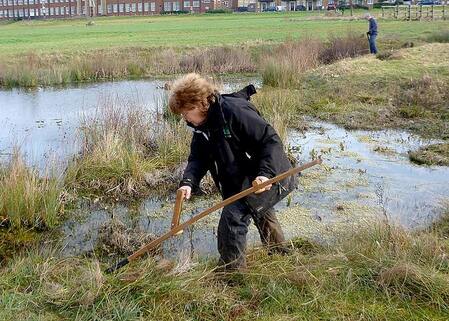
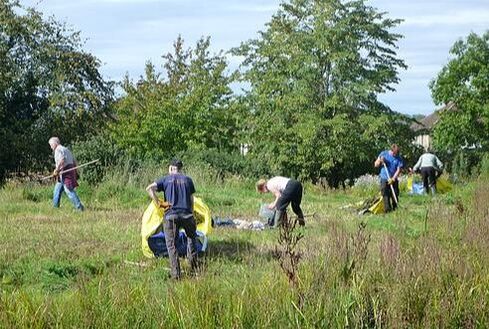
Judy is now getting quite skilled at scything. Scything of grass in the meadow areas and reed around the ponds and beside the stream is essential to prevent fast-growing vegetation from smothering less vigorous plants. During trimming of the blackthorn, two eggs of the brown hairstreak butterfly, Thecla betulae, were found by Ellen Lee, who had found 16 in total in recent weeks. Photos of the eggs, and volunteers at work, are here. |
|
|
4 February 2024 Peter Somogyi's bird report:
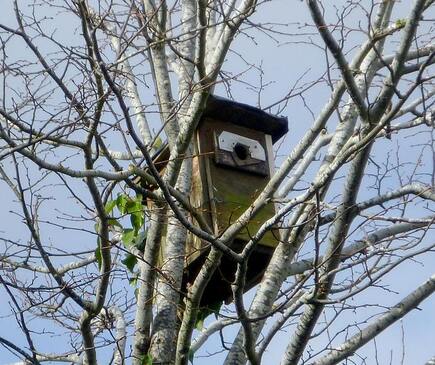
I've added three more bird boxes this year, one for starlings just this morning [shown in photo] in the corner near the church. This box was originally made about 1986 for our garden, but the starlings died out after a few years of nesting, just as they declined nationwide. In the last five years the box was in my daughter's garden in Tingewick, where in a village setting every year there were two broods. But the box rotted and squirrels damaged it. I made them a new one and the ancient museum piece with an armour-plated entrance against squirrels is now in Milham. Bird photos by Peter and others are on the Birds page |
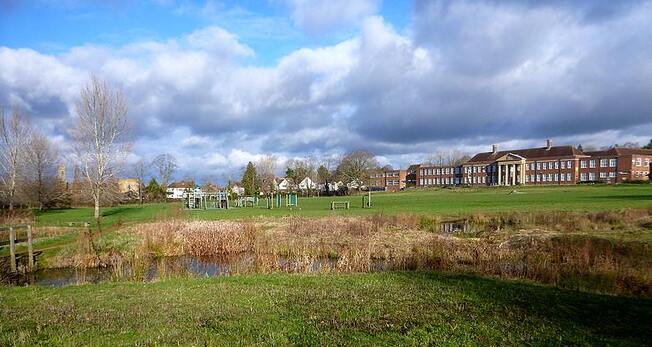
Milham Ford Nature Park - 14 January 2024
5 January 2024
Edward Cervetto reported seeing a kingfisher in the park.
He'd previously seen one there in March 2022. One was first spotted in 2021.
Edward Cervetto reported seeing a kingfisher in the park.
He'd previously seen one there in March 2022. One was first spotted in 2021.
|
|
|
26 February 2023 More good work by volunteers - photos here
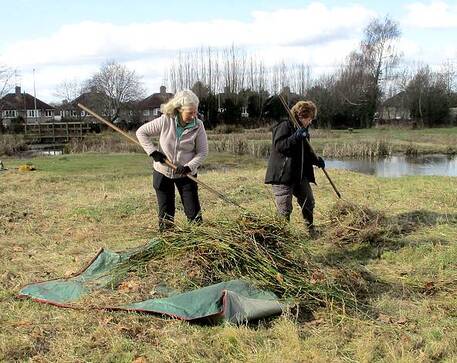
Rosie Martin and Judy Webb, Milham Ford Nature Park, 26 Feb 2023
|
16 March 2023 Judy Webb tweeted: 'Milham Ford Nature Park wetland complex has 33 clumps of frog spawn today! And oh, how nice to have a cheerful display of coltsfoot flowers on the mounds nearby'. Judy's photos are here.
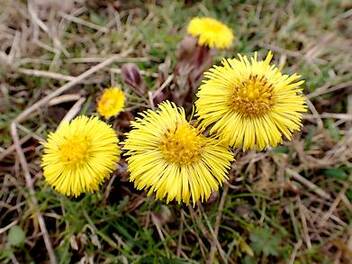
Coltsfoot, Tussilago farfara - photo by Judy Webb
|
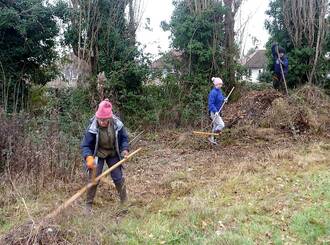
Milham Ford Nature Park, 29 January 2023
|
29 January 2023 More scything and raking.
Richard Queralt, one of the expert scythers, brought along a delicious apple cake he'd made - much appreciated by everyone! Photos here (but, sadly, none of the cake - photographer, impressed by cake, and busy finding out ingredients used, found only a few crumbs left to capture). |
For previous volunteering events, click here
Judy Webb, the Friends of Milham Ford Nature Park volunteering coordinator, used to teach Biology at Milham Ford School, which previously occupied the buildings that are now an Oxford Brookes University campus.
In 2012 she produced a short history of the school. Among the photos Judy has included is one taken in 1996 showing pupils creating a second, clay-puddled, pond in the marshy area beside the tennis courts (Harberton Mead side). That pond can still be found today, as can the site of the first one, on the Jack Straw's Lane side, near the corner with Marston Road, after a lot of wet weather.
In 2012 she produced a short history of the school. Among the photos Judy has included is one taken in 1996 showing pupils creating a second, clay-puddled, pond in the marshy area beside the tennis courts (Harberton Mead side). That pond can still be found today, as can the site of the first one, on the Jack Straw's Lane side, near the corner with Marston Road, after a lot of wet weather.
Shrubs, trees, flowering plants, ferns and allies: a species list for the park compiled by Judy Webb following a survey she carried out on 23 June 2019.
Separate list for Dandelion Family: species found by Judy between 1 May 1999 and 5 June 2009
Bees found in the Park Fungi (2015) found in the Park
Hairy-footed flower bees in the Park These bees nest in holes in dry, sunny, banks, mounds or old walls. The males (one of them posed on Judy's finger) do not sting. Photos taken by Judy Webb in April 2014 are on Dropbox.
Aquatic vertebrates and invertebrates found in the park (2014)
Separate list for Dandelion Family: species found by Judy between 1 May 1999 and 5 June 2009
Bees found in the Park Fungi (2015) found in the Park
Hairy-footed flower bees in the Park These bees nest in holes in dry, sunny, banks, mounds or old walls. The males (one of them posed on Judy's finger) do not sting. Photos taken by Judy Webb in April 2014 are on Dropbox.
Aquatic vertebrates and invertebrates found in the park (2014)
IMPORTANT REQUESTS - PLEASE HELP PROTECT THE WILDLIFE
Please don't bring any FISH, FROGS or TOADS to the ponds. Fish eat the spawn of amphibians (frogs, toads) and the larvae of dragonflies, damselflies and broad-bodied chasers, as well as other small pond creatures. They also bring with them the risk of introducing ranavirosis, a disease that kills thousands of frogs each year.
Please don't bring any PLANTS to the ponds or park. What's an asset to your garden could be very bad for the ecology of the park, if it spreads.
Please don't allow DOGS to swim in the ponds. They churn up the mud, which coats the leaves of the pond plants and prevents them getting the sunshine they need to survive. The ponds need plants to create oxygen in the water for the pondlife. To prevent health risks and to preserve the flowers and fungi, please keep your dog on a lead so you can keep track of any 'deposits' and bag-and-bin them. (There are red bins for dog excrement.) Dog excrement adds nutrients to the soil making conditions more favourable for grass, which could then smother and kill off the wildflowers and the fungi.
Roundworm eggs in dogs' faeces can survive for up to 5 years in the soil. Ingesting even just small particles of soil contaminated by dog faeces can cause toxocariasis, which can lead to blindness, as with the toddler who fell in dog mess (click here) and a woman who had to have an eye removed 30 years after becoming infected (click here).
Please don't bring any FISH, FROGS or TOADS to the ponds. Fish eat the spawn of amphibians (frogs, toads) and the larvae of dragonflies, damselflies and broad-bodied chasers, as well as other small pond creatures. They also bring with them the risk of introducing ranavirosis, a disease that kills thousands of frogs each year.
Please don't bring any PLANTS to the ponds or park. What's an asset to your garden could be very bad for the ecology of the park, if it spreads.
Please don't allow DOGS to swim in the ponds. They churn up the mud, which coats the leaves of the pond plants and prevents them getting the sunshine they need to survive. The ponds need plants to create oxygen in the water for the pondlife. To prevent health risks and to preserve the flowers and fungi, please keep your dog on a lead so you can keep track of any 'deposits' and bag-and-bin them. (There are red bins for dog excrement.) Dog excrement adds nutrients to the soil making conditions more favourable for grass, which could then smother and kill off the wildflowers and the fungi.
Roundworm eggs in dogs' faeces can survive for up to 5 years in the soil. Ingesting even just small particles of soil contaminated by dog faeces can cause toxocariasis, which can lead to blindness, as with the toddler who fell in dog mess (click here) and a woman who had to have an eye removed 30 years after becoming infected (click here).
Planning Application 13/02630/FUL
Appeal against refusal by Oxford City Council of 2nd application for consent for housing development in Harberton Mead, close to the Park, DISMISSED on grounds of detrimental effect on low-density sylvan character of Headington Hill Conservation Area.
Appeal against refusal by Oxford City Council of 2nd application for consent for housing development in Harberton Mead, close to the Park, DISMISSED on grounds of detrimental effect on low-density sylvan character of Headington Hill Conservation Area.
